Google
 

Welcome


Powered by IP2Location.com
Remember . . . When you visit this BLOG and you see a photo you like, just click on the photo to enlarge it.

Important Links

Check out the "Important Links to Sites about Polar Bears" in the sidebar to see organizations doing research and working to preserve the magnificent Polar Bear.

Protect a species, one bear at a time - Polar bears need your help now!

Sunday, January 13, 2008

Churchill: A Town Under Siege - by Anne Gordon

Two young bears after a swim in the near freezing waters of Hudson Bay.


For six weeks from mid October through to the end of November, Churchill, in Canada's remote north, becomes a town under siege.

Its local population swells from 900 Churchillians to a whopping 10,000; the attraction, the annual migration to the sea ice of the world's largest, most ferocious land predators.


Each year at this time a polar bear migration that dates back thousands of years is set in motion as the waters along the western coast of Hudson Bay begin to freeze. With an inborn instinct, polar bears, scattered for hundreds of miles across the tundra, sense this change.Having fasted on a diet of berries, kelp and grasses for close to three months, the siren call of the ice is irresistible. Prompted by a gnawing hunger for meat the ravenous bears are enticed by the prospects of a feed they favour above all else; the soft tender flesh of ringed seal pups.

Standing up to three and a half meters tall at full stretch, the largest weighing in at 675 kilograms, these magnificent killing machines move across glacial rock and tundra from their southern stamping grounds for the town that just happens to be on the direct route to the sea ice.


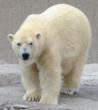
A curious bear is drawn to investigate the delectable odours
emanating from the Tundra Buggy.
With a sense of smell twenty times stronger
than that of a human, not much escapes his attention.


As they approach, Churchill, with years of polar bear encounters, prepares its defences. Sirens are tested, extra rangers from around the country are brought in to patrol the town's boundaries and divert the invaders. The polar bear jail is readied and rifles are loaded with cracker shells . . . . a big bang causing no physical damage.

There was a period in the '70s when any poar bear wandering into town was shot. Not so today.

Bears that slip into town after managing to evade the ´polar bear police´ on the town's outskirts are either darted or lured into a trap baited with delectably fragrant cloth doused in whale or seal oil. From there the bears are transported to the ´polar bear jail', a huge metal enclosure just steps from Churchill's Lilliputian airport

On my recent visit to Churchill for a bear watching safari, the jail was already temporary home to ten miscreants. In 2005, 58 polar bears passed through its accommodations. The polar bears, kept in a cubicle in solitary confinement for 30 days, are fed a diet (or non-diet) that can only be described as bland. No seal meat, no whale blubber, not even a kelp snack, only water in the form of snow.

Life in the jail was not always so spartan for these gigantic carnivores. At first bears were given 'tasty meals', but then the town soon discovered its mistake. The wily animals returned the following year for a comfortable wait and regular feeding at 'Hotel Polar Bear'(the jail)until the waters of Hudson Bay froze over allowing them to hunt. It seemed that hard labour was the only answer.

Most frequently in the past the bears highway into town was via Button Street ending up opposite the Lazy Bear Lodge in the town's center. Disturbed at the thought - I was staying at the Lazy Bear Lodge - I asked Jerry our guide what to expect should I see a bear sneaking out from one of the alleys lining the main street. "Don't worry" he said. "If you see a bear just give it a wide berth! Once they reach town the stimuli usually confuses them. Houses and cars are left unlocked during the bear season so just duck into the nearest door or flag down a car."

Was it any consolation to hear that problem bears, those that return again and again, are sedated and shipped out of town in a cradle hanging beneath a helicopter?

Indeed it was. Doped and disoriented, delinquent bears are deposited in a more northerly area close to the sea ice. The cost of this punishment, starting ta $5,000 a time, is borne by the Churchillians. A fund, kept in the black by film crews who want to photograph an evacuation, lessens the burden with a constant inflow of photography fees.

As I snuggled deep into my duvet in The Lazy Bear Lodge that first night on Canada's wild frontier, my thoughts drifted back to the day's polar bear safari on the tundra.

On a viewing platform at the back of the giant tundra buggy I had a nose to nose encounter with a massive male polar bear. He had stretched himself full length against the side of the buggy to get a better view of us on the platform. Just feet apart, my camera trained on his face, I looked into apair of dangerously intelligent eyes. They were dark brown edged with a milky halo. He hissed softly as he watched me. As I looked back at him through my camera lens I felt almost hypnotized.

He was what Jarret, our driver, called a 'real pretty bear', but the truth is that this huge, fluffy, cuddly looking animal with its gentle dog-like face could and would, given the opportunity,crush a human head with its powerful jaws in seconds. A representative from the Polar Bears International organization showed us exactly how in a demonstration with Jarret, our driver, acting as polar bear lunch. Using a bear skull to illustrate the nears modus operandi, she opened the jaws then clamped them over Jarret's head.

Jarret Long, our Tundra Buggy driver, in a demonstration
showing a polar bear's mode of attack
once it has pulled a seal from it's breathing hole on the sea ice.


Meanwhile, back in the Lazy Bear Lodge the sharp report of cracker shells throughout the dark night reminded me that it was dangerous out there. On patrol 24/7 rangers touring the town's perimeter and equipped with spotlights, illuminate dark spaces where polar bears could be hiding.

Should a bear be seen in town, the eerie wail of a siren alerts the townspeople.

Thinking back on this incredible days on Canada's Arctic tundra, I couldn't help fear for the future of these magnificent beasts. The polar bear population has dwindled to around 25,000 and the alarm bell is tolling for their survival. Because of global warming, the sea ice id forming later each year. The bears are having to fast up to three weeks longer. Spending less time on the ice means the bears are unable to hunt and build up the body reserves necessary for the summer months on land.

There is a danger according to Lara Hansen, a scientist with the World Wildlife Fund, 'that bears could become so thin by 2012 they may no longer be able to reproduce." Without a determined effort to control this mounting problem this could be the century that polar bears become a memory, a tragic loss for humanity.


Guide Jerry Anderson takes members of a tour group
past the polar bear jail on the edge of town.


Anne Gordon and James Gordon are travel writers based in Guelph, ON, Canada

This article has been included here in its entirety. It was copied from DEL Condominium Life, Spring issue 2007

Photographs by Anne Gordon

Read More, See More Photos and Read the Comments . . . CLICK HERE

Help Protect Polar Bears as Endangered

Polar bear photo by Brendan Cummings.
Please forward this message to 10 friends.
It's our last chance to influence the process
a- let's rally as many people as we can.


This article is from the newsletter by The Center for Biological Diversity:


Polar bears are in trouble. The melting of the Arctic is killing them. Some are already starving and drowning. If global warming is allowed to continue, the Arctic will be entirely ice-free during the summer, dooming polar bears to extinction.

Read more about the petition to the US Government.


But as you may have seen in the news over the past few days, federal bureaucrats are illegally delaying a decision to protect the polar bear under the Endangered Species Act. Meanwhile they are fast-tracking Arctic oil drilling while the bear remains unprotected!

The Center for Biological Diversity and our allies are preparing to go to court to force the administration to finalize the Endangered Species Act listing. But we need your help as well. Polar bears need a massive groundswell of public support to show that people are watching and will not tolerate delays, denial, or political game-playing.

Tell the Bush administration to immediately list the polar bear as an endangered species. With your help, we'll send the petition with 50,000 signatures to the White House on January 31st.

Click the wolf for the petition.


When I wrote the 170-page scientific request to list the polar bear as an endangered species in 2004, I never dreamed how much public support it would garner. Hundreds of thousands of people have urged the government to act.

The decision to save the polar bear - or not - is in its final stages. Please take a minute to sign the petition today . Polar bears will thank you for it.


Sincerely,

Kassie Siegel
Climate, Air and Energy Program Director
Center for Biological Diversity

p.s. Check out this story in National Geographic:

NATIONAL GEOGRAPHIC NEWS January 7, 2008

U.S. Delays Polar Bear Decision
BY John Roach

The U.S. government today postponed a final decision on whether to list the polar bear as a threatened species under the Endangered Species Act.

The delay stems from a backlog of work, not scientific uncertainty or a pending lease sale for oil and gas development in polar bear habitat, the U.S. Fish and Wildlife Service said during a telephone press briefing.

The service said it will miss its original Wednesday deadline but plans to make a formal recommendation within 30 days. No firm decision date was set, however.

Evaluation of a suite of reports from the U.S. Geological Survey that concluded two-thirds of the world's polar bears could go extinct by 2050 prompted the delay, the service said.

The studies were completed last September, but in response, the U.S. Fish and Wildlife Service reopened and extended a public comment period on the findings.

Evaluation of the new science and the comments it generated is still going on, Dale Hall, director of the U.S. Fish and Wildlife Service, said during the briefing.

"While we do not like missing time lines that are called for under the act, it is far more important to us to get a right answer and have it explained properly to the public," he said. "So we'll be needing to take some extra time here to finish that up."

Scott Bergen is a landscape ecologist with the New York-based Wildlife Conservation Society and a contributing author to the U.S. Geological Survey polar bear studies. He said he is disappointed with the delay.

"At least with the scientific team I was involved with, it was pretty clear, especially with the polar bear population that exists in Alaska, that they are in danger," he said. "I'm hoping this delay is temporary and only 30 days."

Lawsuit and Suspicions

A coalition of environmental groups said today they will file a lawsuit notice Wednesday to enforce the deadline. The groups are suspicious the delay is political, not scientific.

For example, the U.S. Mineral Management Service announced last week that it will hold a final lease sale for oil and gas development in the Chukchi Sea off the northwestern Alaskan coast, which is polar bear habitat. The sale is slated to happen on February 6.

"It's very suspicious," said Kassie Siegel, climate program director at the Center for Biological Diversity and lead author of the 2005 petition to list the polar bear.

"It's our experience that when listing decisions get delayed in Washington, D.C., it's always a bad thing, because Washington, D.C., is where the political interference happens," she added.

Fish and Wildlife director Hall said the lease sale has no bearing on the delay and added that any action related to the lease sale would still have to comply with the Endangered Species Act and other environmental regulations.

Scientific Certainty

In addition, Hall noted, there is no strong scientific uncertainty regarding the U.S. Geological Survey findings that two-thirds of polar bears face a risk of extinction by 2050.

"It's just unfortunately one of those times I'll have to tell you we'll have to miss a deadline in order to provide the quality and product that we believe needs to be provided," he said.

Alaska Governor Sara Palin wrote in a January 5 op-ed for the New York Times that "there is insufficient evidence that polar bears are in danger of becoming extinct within the foreseeable future-the trigger for protection under the Endangered Species Act."

The Center for Biological Diversity's Siegel said all science has a degree of uncertainty but that uncertainty is very low for the polar bear.

Polar bears eat mostly seals and other fatty marine animals that they hunt from sea ice. The bears prefer to hunt from ice that hangs over shallow continental shelf waters, which contain more prey than deeper waters offshore.

But summer sea ice in the polar bears' Arctic habitat is shrinking and retreating farther and farther from the coastline, which crimps the bears' ability to forage efficiently. Some bears are starving to death.

Scientists believe human-caused global warming is contributing to the decline in sea ice habitat.

Saving polar bears, therefore, requires human action to reduce emissions of greenhouse gases, Siegel noted. But taking such action is a political decision.

"We know what we have to do to save polar bears," she said. "We just have to start doing it."

Polar bear photo by Brendan Cummings.


Click on the Wolf above to see more on protection of Endangered and near endangered Species at the Center for Biological Diversity. Help protect the Polar Bear and other species.

Read More, See More Photos and Read the Comments . . . CLICK HERE

Sunday, September 9, 2007

Toronto's last polar bear heads back up north

Bye, to Bisitek

As of Aug 21, 2007 Polar Bears are off display until further notice due to commencement of Tundra construction project.

Bisitek, 27, just moved to the Cochrane Polar Bear Habitat and Heritage Village to join the three other polar bears Aurora, Nakita and Nanook. Nicknamed “Bisi,” she is planning on retiring in Cochrane after spending most of her life at the Toronto Zoo.


Toronto Star, Sep 07, 2007

Polar bear lovers are out in the cold in Toronto. The last polar bear has left the Toronto Zoo and the exhibit has shut down while a $12 million, two-year redevelopment begins.

The zoo has shipped off 27-year-old Bisitek to northern Ontario, where she is to enjoy "a restful retirement" at the Cochrane Polar Bear Habitat, according to zoo officials.

The move was made to allow the zoo to launch a bigger and better polar bear habitat and tundra phase, where Arctic wolves, reindeer, snowy owls and other animals would be introduced.

The project is expected to be completed in 2009."Polar bear lovers will just have to be patient," said Toronto Zoo curator Maria Franke.

For the next two years, Cochrane will be the only Ontario city with polar bears in captivity.

The Cochrane exhibit now has four polar bears at the all-season habitat, located eight hours north of Toronto.

Bisitek, who was taken by a refrigerated trailer late at night last month, had been a fixture at the Toronto Zoo since 1980.

Orphaned in the wild, she was donated to the zoo by the Canadian Wildlife Service.

Last fall, Bisitek's pen mate Kunik died and the cause of his death has been attributed to West Nile virus.

Kunik began having trouble using his hind legs Sept. 19 and was put down for humane reasons two days later.

"We will miss Bisitek very much," Franke, the Toronto curator, said. "The polar bears were one of the top animal attractions at the zoo. However, it's going to be an exciting time introducing new polar bears to the Toronto Zoo."

Zoo officials say that Bisitek was sound asleep when she reached her destination and was not disoriented upon arrival.

She was accompanied by Franke, her keeper and a veterinarian.

In Cochrane, Bisitek will be reunited with Nikita and Aurora, who were donated to the Toronto Zoo in 2001.

Polar bears rarely live much past 30 years in captivity, although the oldest in Canada is believed to be 40 and living in Winnipeg.

The Toronto Zoo has begun the search for new polar bears. It expects to have a male and two females with hopes they will produce cubs when the revamped exhibit opens in 2009.

Curtis Rush Toronto Star, Staff Reporter


Timmins Daily Press

New polar bear for Cochrane
By Michael Peeling


The Cochrane polar bear family has a new addition from southern Ontario.

Finding herself without a home at the Toronto Zoo, 27-year-old female polar bear
Bisitek now hangs her hat at the Cochrane Polar Bear Habitat and Heritage Village,
where she will share space with twin females Nakita and Aurora, and male Nanook,
who is also 27.

Known to her keepers as "Bisi," they decided the aged bear should retire at the
Northern Ontario habitat now that the Toronto Zoo has closed its habitat for renovations.

For the next two years, Cochrane will be the only place in Ontario for the public to see polar bears.

The Cochrane habitat's director of conservation, Patricia Morin, says Bisi handled
the Aug. 20-move well.

"She slept the whole way from Toronto," Morin said. "It took us 25 minutes to wake her, but she's adapting well. She already knows how to shift from room-to-room."

Morin said the results of Bisi's blood work were good, a precaution taken to ensure
she doesn't bring diseases such as West Nile Virus up north.

A polar bear moving to a new location could be kept in quarantine for 30 to 42 days,
but Morin hopes Bisi will be ready to join the other three bears in the habitat before the next two weeks are up.

"We have to be careful not to let her out too fast," Morin said. "If we do, chances
are she'll just run to other side of the pen and stay away from the other bears.
Moving can be very stressful for a polar bear."

However, polar bears are naturally solitary animals according to Morin.
She said Bisi has actually flourished since her mate died a year-and-a-half ago.

The efforts to acclimate Bisi will include taking her through new routines used
at the habitat and making first contact with her peers through wire mesh.

"They need to get used to each other first," Morin said. "If we let them interact
with each other right away, the other girls might intimidate her."

The eventual meeting of three female bears will actually be a reunion because
Nakita and Aurora lived at the Toronto Zoo in 2001 before moving to Cochrane.

Bisi will have to adjust to living on grass as well - something she hasn't experienced since she was born in the wild - because the Toronto Zoo habitat is made up mostly of concrete slabs, and more snow in the winter.

She was orphaned in 1980 and saved by the Canadian Wildlife Service. Habitat spokeswoman Erin Van Alstine expects to see Bisi rolling around on the grass
a lot as she adjusts to the perks of the environment.

"At first you'll probably see a lot of hesitation from her," Van Alstine said.
"She'll be thinking, 'Do I? don't I?'"

Van Alstine anticipates a big spike in the number of visitors to the Cochrane
habitat now that the Toronto Zoo polar bear area is temporarily closed until fall 2009. As it stands, the Toronto Zoo isn't planning on having Bisi back once renovations are completed.

"Right now the plan is to keep her here during her retirement," Morin said.

"It's not good to keep moving polar bears, but ultimately it's up to the Toronto Zoo."


Photos by Urso Branco

Read More, See More Photos and Read the Comments . . . CLICK HERE

Two-thirds of the world's polar bears will be killed off by 2050

Two polar bears on a chunk of ice in the arctic.


Global warming to decimate polar bears: scientists

Updated Sat. Sep. 8 2007 2:30 PM ET

Associated Press

WASHINGTON -- Two-thirds of the world's polar bears will be killed off by 2050, including the entire population in Alaska, because of thinning sea ice from global warming in the Arctic, government scientists forecast Friday.

Only in northern Canada and northwestern Greenland are polar bears expected to survive through the end of the century, said the U.S. Geological Survey, which is the scientific arm of the Interior Department.

USGS projects that polar bears during the next half-century will lose 42 per cent of the Arctic range they need to live in during summer in the Polar Basin when they hunt and breed.

Polar bears depend on sea ice as a platform for hunting seals, which is their primary food. They rarely catch seals on land or in open water. But the sea ice is decreasing due to climate change and the latest forecasts of how much they are shrinking are, if anything, an underestimate, scientists said.

"There is a definite link between changes in the sea ice and the welfare of polar bears," said USGS scientist Steven Amstrup, the lead author of the new studies. "As the sea ice goes, so goes the polar bear."

Scientists do not hold out much hope that the buildup of carbon dioxide and other industrial gases blamed for heating the atmosphere like a greenhouse can be turned around in time to help the polar bears anytime soon.

"Despite any mitigation of greenhouse gases, we are going to see the same amount of energy in the system the next 20, 30 or 40 years," Mark Myers, the USGS director, said.

Greenland and Norway have the most polar bears, while a quarter of them live mainly in Alaska and travel to Canada and Russia. The agency says their range will shrink to no longer include Alaska and other southern regions.

The findings of U.S. and Canadian scientists are based on six months of new studies, during which the health of three polar bear groups and their dependency on Arctic sea ice were examined using "new and traditional models," Myers said.

USGS issued nine separate reports on polar bears Friday. Those included projections for one group of polar bears in the Southern Beaufort Sea and two in Canada that are among 19 distinct subpopulations.

They were made public to help guide Interior Secretary Dirk Kempthorne's decision expected in January on his agency's proposal to add the polar bear to the government's endangered species list.

USGS declined to provide precise estimates of polar bear populations 50 years from now.

A separate organization, the World Conservation Union, based in Gland, Switzerland, has estimated the polar bear population in the Arctic now is about 20,000 to 25,000, put at risk by melting sea ice, pollution, hunting, development and tourism.

Last December, Kempthorne proposed designating polar bears as a "threatened" species deserving of federal protection under the Endangered Species Act, because of melting Arctic sea ice from global warming. That category is second to "endangered" on the government's list of species believed most likely to become extinct.

That action is in response to a lawsuit in 2005 by three environmental groups - the Center for Biological Diversity, Natural Resources Defense Council and Greenpeace - to force such a proposal from Interior's Fish and Wildlife Service, which oversees endangered species.

The fate of polar bears has struck a public nerve. Fish and Wildlife officials have received 600,000 public comments so far on the proposed listing, spokesman Chris Tollefson said.

On Friday, Representative Edward Markey (D-Mass.), urged President George W. Bush's administration to grant polar bears federal protection.

"This is becoming a tragic metaphor for the administration's voluntary approach to global warming," said Markey, chairman of the House Select Committee on Energy Independence and Global Warming. "Instead of meeting the challenge, the Bush administration is happy to float along, waiting to see if the planet, and polar bears, will sink or swim."

From CTV News.


Read More, See More Photos and Read the Comments . . . CLICK HERE

Friday, July 27, 2007

Knut Photo Gallery

On December 5, 2006 Knut was born in the Berlin Zoo. His mother abandoned him so the zoo trainer adopted him. He plays with Knut daily and at first he slept with Knut. The kids in Berlin adore Knut.

You can see several videos of Knut at:

http://blog.rbb-online.de/roller/knut/category/Knut+international

http://blog.rbb-online.de/roller/knut/category/Videos+von+Knut

http://www.rbb-online.de/knut/


Now we will show you many photos of Knut starting with his birth.


Sleeping in the Incubator.


Warm and safe.


Feeding time.


Resting with friends.


Play time!


Knut's mom


Cuddly Knut


A sweet Baby.


Here I am world!!!


A head scratch feels good.


A sweet face!


Tender loving care.


First steps.


A gift from Canada.


This Canadian Ball is lots of fun.


A nap for Knut.


Wake up!


Looking around.


Maybe I will sleep some more.


A handsome fellow.


Getting big.


A back scratch is great.


Fishing fun!


Playing with my best friend!


This tastes good!


All Knut photos from Knut's website and Der Spiegel

Read More, See More Photos and Read the Comments . . . CLICK HERE

Sunday, March 11, 2007

Proposal to List Polar Bears as Threatened


PROPOSAL TO LIST POLAR BEARS
AS THREATENED


From Panda Mail, Jan 31, 2007

WWF-Canada praises the recent proposal by the U.S. Fish and Wildlife Service to list the polar bear as “Threatened” under the U.S. Endangered Species Act. WWF-Canada had supported the petition to classify the species as Threatened, based on a large volume of very compelling information about significant changes to the polar bear's habitat - the Arctic sea ice. This ocean habitat is vanishing as a result of warming air and sea temperatures over the last decades, caused by the burning of fossil fuels. For more on this recent decision, or to learn more about polar bears in Canada, go to wwf.ca.

Read More, See More Photos and Read the Comments . . . CLICK HERE

Friday, March 9, 2007

You can help save the Magnificent Polar Bear

Urgent Notice:

Polar Bears are now on the
World Conservation Union's Red List
of Threatened Species.


A report from WWF-Canada

We saw it coming. The reality is now here.

Global warming will result in an alarming decline in polar bear populations within 45 years. The World Conservation Union, a global network of government, non-government and scientific organizations including WWF, recently determined that there is now an even greater risk of extinction of this magnificent species, almost two-thirds of whom are found right here in Canada.

There are several threats plaguing our nation's polar bears today - pollution and industrial development among them.

But none is greater or more challenging than the catastrophic effects of global warming on the polar ice cap, the polar bear's only home.

It seems there's no refuge from global warming -
not even in our great north
.


The polar bear, the world's largest terrestrial carnivore, spends much of its life on the frozen sea. They depend on it to reach seals, their main prey. After they feed, the sea ice melts and they come ashore until fall. Their stored body fat must sustain them during the long fast on land.

However, with increasing levels of carbon dioxide and other heat-trapping gases in the atmosphere from the burning of fossil fuels, global temperatures are on the rise. This is causing arctic ice to melt earlier in the spring and form later in the fall.

This leaves polar bears less time to hunt to build up their essential body fat. This has meant starvation for some bears and their young cubs, and even drowning as a result of having to swim too far to reach food. And it will only get worse if we do nothing now.

The troubling facts speak for themselves.

Did you know . . .

- There are now reports of polar bears eating each other to survive in the Russian Arctic

- The summer of 2005 saw the smallest extent of sea ice ever

- Fewer than 25,000 polar bears remain in the wild today

- The Western Hudson Bay polar bear is facing extinction in our children's lifetime

If the warming trend continues unabated, scientists believe polar bears may disappear completely within 100 years.

Imagine. A species that has survived hundreds of thousands of years - and one that is the very symbol of our country's northern wilderness - snuffed out by the time our great grandchildren reach retirement.

But there is hope, you and I stuill have time to stop this horrific and preventable loss.


For our polar bears - and every living thing - support
the WWF-Canada fight against global warming.


Canada's polar bears are just some of the living treasures threatened by global warming. I can name countless others - birds, fish, entire forests and lakes, Nor will humans escape the ravages (look no further than the extreme weather events occurring all around us)!

Climate change is a crisis with very local and personal consequences. And it truly needs to be fought on every scale - local, regionally and globally. There are a number of important changes we, as individuals, can make in the fight against climate change. But a problem of such global proportions requires an equally global organization to tackle it. That's where we come in.

WWF's scope reaches the very top levels of private companies and governments - the organization that must make the most significant contributions in the battle against climate change.

Your donation today at (www.wwf.ca/climate) will increase WWF's ability to save life everywhere.

So what will your support allow WWF to do? Simply, to set up action on the following critical initiatives>

- Protecting fragile ecosystems. WWF fights for the protection of critical natural areas, including the boreal forest, which absorbs an enormous amount of greenhouse gases.

- Influencing government on your behalf. WWF works with governments at all levels to initiate laws and agreements to reduce energy use . . . encourage the development of clean and renewable energy sources like wind and solar . . . and WWF will do everything necessary to ensure Canada meets its international obligations to reduce greenhouse gases.

- Ensuring industry plays its part. WWF partnership with companies like Sony, Johnson & Johnson and others is helping reduce energy consumption while introducing new clean energy into corporate opeartions.


Help stop the neglect of our planet.

Our planet is suffering from decades of neglect. But together we can be the first generation to stop the downward cycle.

As a personal supporter of WWF-Canada I urge you to visit their website and make a donation to help our fight against global warming.

Visit their website www.wwf.ca/climate


Urso Branco


This report was excerpted almost in its entirety from a mailing report from WWF-Canada

Read More, See More Photos and Read the Comments . . . CLICK HERE

International Polar Year


Canadian taking lead in International Polar Year

Updated Thu. Mar. 1 2007 3:44 PM ET

Reprinted from CTV.ca News Staff, Toronto Canada


Thursday marked the official start of International Polar Year (IPY) 2007-2008, a worldwide program that will be the most intensive period of research on the polar regions in half a century.

More than 50,000 scientists from 63 countries will be conducting and sharing research during the two-year program, assessing the Arctic and Antarctic and making forecasts and recommendations for the future.

Canada will be spending $150 million to fund 44 research projects with the IPY-- the most of any participating country. All the projects are aligned with one of two priority areas:

* climate change impacts
* and adaptation and the health and well-being of Northern communities.

"Changes in the Arctic due to climate change are a signal, an early warning to Canadians," Environment Minister John Baird said in announcing the funding.

"These projects will give us a better understanding of the effects of climate change and other pollution falling on the North and that will lead to further actions we need to protect our water, land and citizens."

The largest of Canada's projects is being led by Dr. David Barber from the University of Manitoba, who is conducting a study called the Circumpolar Flaw Lead (CFL) System Study.

The project includes 200 scientists from around the world studying the "flaw lead" system, a circumpolar phenomenon created when the central Arctic ice pack moves away from coastal ice, leaving areas of open water.

The IPY takes place every 50 years. The first, in 1882-83, saw researchers from 11 countries establishing research stations around the Arctic and provided the foundation for much of the polar science knowledge we have today. During the last IPY in 1957-58, climate change and its effects on the poles were just emerging as a scientific issue.

Fifty years later, the devastating effects of global warming are becoming even clearer. What's more, scientists are armed with much better technology, especially satellites to study polar regions, known as the cryosphere.

"Often we study parts or pieces of the system, but IPY provides an opportunity to put the picture together as a whole," David Hik, Executive Director of the Canadian International Polar Year secretariat, told Canada AM Thursday.

"This year, all disciplines will be included. So they'll be looking at the climate, they'll be looking at permafrost, wildlife and polar bears and treeline changes. And most importantly, what we're calling the human dimension of change in the polar regions."

Arctic population health projects led by specialists at Laval University in Quebec will receive a lion's share of the federal funds.

"It will benefit the people of the North, the residents who are being affected by rapid change," Hik says.

Canadian researchers will also be participating in studies of polar bears, the disappearing permafrost and Arctic glaciers and the ecosystem in Yukon's Kluane National Park.

Hik said what also distinguishes this IPY from previous is that "the world is paying attention to the polar regions now."

"We know that the changes occurring there affect the rest of the planet," Hik said.

"And there's a great deal of interest in both the Arctic and the Antarctic as the sort of 'switch' that could have the greatest effect on the planet."

The world's top climate scientists said in a United Nations report last month that "average Arctic temperatures increased at almost twice the global average rate in the past 100 years."

They projected that sea levels could rise by 18 to 59 cm by 2100, by when Arctic sea ice may disappear in summers.

International researchers plan to try to quantify the amount of fresh water leaking out from underneath ice sheets in Antarctica, which takes place beneath the ice and has been difficult to measure.

Other projects include:

* the installation of an Arctic Ocean monitoring system, described as an early warning system for climate change;
* a census of the deep-sea creatures that populate the bottom of Antarctica's Southern Ocean.
* the mapping of the Antarctic's lakes and mountains -- some trapped under about ice for more than 35 million years; and,
* astronomers will investigate plasma and magnetic fields kicked up by the sun using telescopes, balloons and spacecraft.

The polar year is being sponsored by the UN's World Meteorological Organization and the International Council for Science. About $1.5 billion has been earmarked for the year's projects by various national exploration agencies.

Read More, See More Photos and Read the Comments . . . CLICK HERE

Tundra Buggy

The Fabulous Tundra Buggy


HISTORY

The company behind the original polar bear experience.

In 1979 the Tundra Buggy® Adventure, originally known as Tundra Buggy Tours Ltd., began conducting polar bear tour trips from Churchill, Manitoba to the frozen tundra, some thirty kilometers away. From the safety and comfort of a Tundra Buggy, visitors were able to get closer than anybody had been before to the majestic polar bear. What began with historic Buggy #1 and an elite group of photographers and adventure seekers has grown to a world-class Adventure!

Photographing the polar bears of Churchill has been established as a cornerstone to any serious photographer's portfolio and experiencing them has become an important notch on any real adventurer's belt.

In a process that began four years earliers, in 2003 Merv and Lynda Gunter, owners of Canadian North adventuring company, Frontiers North® Adventures, assumed majority
ownership of Churchill's Tundra Buggy company.

Since the involvement of Frontiers North, The Tundra Buggy Adventure has evolved into a company not only known internationally for providing amazing and intimate polar bear tours to Gordon Point and Cape Churchill, but is now also known internationally as a leader in Canada's
Ecotourism industry, with strong company ethos generating global awareness about Churchill's polar bears through groundbreaking initiatives like The Polar Bear Cam and leading support roles in initiatives like Polar Bears International's Polar Bear Leadership Camp and Videoconference Classroom.


Imagine this problem: out on the tundra, in close proximity to where you are, the fearsome Lord of the Arctic (better known as a polar bear) is roaming freely, just waiting for the Bay to freeze over so that he can get out and start hunting seals, his very favourite feast. Now imagine someone comes to you and says that he would like to get out there - on the tundra - where the bears are freely roaming - so that he can get some 'close up' pictures of these Lords.

Now parked in front of you is this huge wheeled - I mean huge, like 5 feet high huge, wheeled vehicle. Sitting on top of the wheels is this huge, I mean huge, wide-bodied enclosure. The vehicle includes a propane heater, a toilet facility and, for all intent and purposes, comfortable
seats, windows (that open) and a large observation deck.

Alas, now you have a Tundra Buggy that allows you to go out on the tundra, in relative comfort and safety to watch and photograph polar bears!

For more information go to the sidebar.

See link in the sidebar - Important Links: Tundra Buggy

Read More, See More Photos and Read the Comments . . . CLICK HERE

Recent History of Polar Bears

What has been happening to polar bears in recent decades?

Polar Bear Ongoings

Polar bears have long captured the attention of the general public but probably at no time in the past have they been more in the forefront of the public's imagination than today. Today's heightened interest in polar bears may be due in part to an enhanced understanding of the ecology of polar bears, their environment, and an increased interest in Arctic issues brought on by concerns for climate change. Results of years of research and studies are now available to an interested public, and efforts to communicate this information to the public has been more effective in recent years than in the past. As a result the current public is generally well-informed and educated regarding the ecology of polar bears. This public, unlike previous publics, has a variety of communication tools that enable it to interact and communicate more effectively with researchers and managers.


Polar bear distribution

What have we learned? We now know that polar bears are not a single large homogeneous population that roams throughout the Arctic. Instead groups of polar bears referred to as stocks or populations, are distributed throughout the Arctic. Research begun in the late 1960s and continuing today also provides a thorough backdrop of information on population demographics, systematically analyzed data on population boundaries, population movements, population size, reproductive and survival parameters, and other useful information about biological, physiological, and ecological aspects of polar bears.

We also realize that polar bears do not occur in large numbers; their ability to replace individuals in the population is very limited and population growth is extremely slow; they are long-lived creatures, which helps to offset the low reproductive potential; their populations fluctuate in response to natural factors such as climate and prey availability; and, populations can also be impacted by humans through factors such as hunting, oil spills, shipping, and other activities. We also realize that the level of human presence and activity in the Arctic continues to build. As a result the potential for humans to impact polar bears has never been greater than today.

Technologically, researchers have been blessed in the last 30 years. Advances in satellite telemetry allowed researchers to follow individual bears over time and greatly enhanced our knowledge of movements and population bounds. Infrared thermal sensory equipment is providing promise in detecting polar bear dens beneath the snow. Extended time-series of data now available for some populations documents trends that were previously not apparent. Improvements in aircraft and vessel transportation have provided access to a larger portion of the range of polar bears than was previously accessible. Finally, technologic advances have allowed for multi-disciplinary Arctic research, which is in many cases supported by polar-class icebreakers. All of these advances plus greater understanding of population dynamics and population modeling now allow for greater precision in making management decisions and a better understanding of risks and consequences of management actions.

In the past, one of the greatest saving graces for polar bear populations was the fact that their habitat was relatively pristine and secure from alteration. In fact a very large portion of the high arctic was void of any human presence. Hence at that time the greatest concern for polar bear populations were over harvest and human development that was occurring at the fringes of the range of polar bears.


Changes in sea ice extent over the past 25 years

Polar bears and their prey have evolved to living in the extreme conditions of the Arctic. Polar bears and seals are dependent on sea-ice for foraging, resting, and reproduction. The Arctic ecosystem was shaped by climate and continues to be driven today by climate. Polar bears and ice seals, primarily ringed seals, serve as key indicators of the effects of climate change on the Arctic environment. Today, polar bear populations are facing threats previously unprecedented during recorded history in the Arctic. Recent climate change scenarios based upon modeling of climate trend data predict that the Arctic region will experience major changes in the upcoming decades. On the most drastic end of the spectrum one model predicts that the Arctic basin may be void of ice within 50 years. Other models have shown that ice thickness has decreased by 40% during the past 30 years and the average annual extent of ice coverage in the polar region has diminished substantially, with an average annual reduction of over 1 million square kilometers.

While the ultimate or progressively evolving effects of climatic change on polar bear populations is not certain, we do recognize that even minor climate changes could likely have a profound effect on polar bears. The following is from the IUCN/Species Survival Commission, Polar Bear Specialist Group (PBSG) web site and in summary indicates the following:

* Climate changes on prey species will have a negative effect on polar bears
o increased snow can result in reduced success in successfully entering seal birth lairs
o decreased snow or increased seasonal rain patterns could effect seal pupping by not providing adequate snow for construction of birth lairs or if rain fall by collapsing birth lairs thus reducing seal productivity
o prey reductions could effect polar bear condition and ultimately cub production and survival
* Changes that alter the period of ice coverage could affect distribution and impact polar bears
o bears may spend greater amounts of time on land
o extended use of terrestrial areas would ultimately effect physical condition of bears when forced to rely on fat stores
o decreased physical condition could effect production and survival
o bears using deteriorating pack ice may experience increased energetic costs associated with movements and swimming
* Denning could be impacted by unusual warm spells
o access to high quality denning areas may be limited or restricted
o use of less desirable denning habitat could have impacts on reproduction and survival
o rain or warming could directly cause snow dens to collapse or be opened to ambient conditions
o loss of thermal insulative properties in opened dens could affect litter survival

As a case in point, in Western Hudson Bay researchers have collected demographic information on polar bears since 1981. Over this time frame and location the sea ice breakup has been occurring earlier. The earlier breakup has been related to the poorer condition of polar bears and there is a correlation between the earlier breakup and a decadal scale pattern of warming air temperatures during the spring between 1950 and 1990. It appears that earlier breakup caused by warmer temperatures has resulted in declines in physical and reproductive parameters of polar bears in this area. This is the only study to date to demonstrate the effects of changed environment resulting from climate changes, and a corresponding effect on polar bears. Climate change is not uniform in all areas of the Arctic, however. Since Hudson Bay is located at the southern most extent of the range of polar bears, findings here may be a forewarning of changes to come in future years for other areas of the Arctic. Clearly, climate change and its effect on sea ice and polar bears should be closely monitored in future years.

Environmental contaminants in the form of persistent organic pollutants (POPs) pose an additional area of increased concern for polar bears. Recent documentation of baseline contaminant levels in the circumpolar environment and in key species has dramatically expanded the knowledge of regional presence and levels of these pollutants over the past 10 years. Polar bears, as an apical predator that tends to amplify the accumulation organochlorines compounds, are a perfect candidate for studies in evaluating trends. We now know that polar bears inhabiting certain areas of the Arctic exhibit elevated levels of organochlorines, particularly PCB's (poly chlorinated biphenyls) while populations inhabiting other areas have lower levels. Laboratory experiments involving elevated levels of organochlorines have been associated with a range of effects including neurological, reproductive, and immunological changes. Studies are continuing to evaluate the effect of persistent organic pollutants on essential life functions of polar bears and other marine animals with an emphasis on evaluating immune and hormonal systems.

International involvement in polar bear conservation dates back to 1965 when scientists from Canada, Norway, Denmark, USSR, and the United States met in Fairbanks to discuss polar bear conservation due to widespread concern that populations were being over harvested. Until this time there had been very little management of polar bears in the Arctic and no coordinated effort among arctic countries. Harvest rates were rising rapidly in most areas except Russia which had enacted a ban on hunting in 1956. The Fairbanks meeting resulted in the formation of the IUCN/SSC Polar Bear Specialist Group (PBSG) whose mission was to coordinate polar bear research and management programs on an international basis and to exchange information on each country's programs.

Members of the PBSG and the countries they represent developed and negotiated the International Agreement on the Conservation of Polar Bears (Agreement), which was signed in Oslo, Norway in May, 1973. Among other conditions the Parties agreed through Article VII to "conduct national research programs on polar bears, particularly research relating to the conservation and management of the species. They shall, as appropriate, coordinate such research with the research carried out by other Parties, consult with other Parties on management of migrating polar bear populations, and exchange information on research and management programs, research results, and data on bears taken." The PBSG meets every three to five years with a goal of advancing the principles of the Agreement. The most recent meeting was held June 2001 in Nuuk, Greenland. The proceedings of the working group meetings are published in the IUCN series.

Highlights of recent activities include: conducting ecotoxological studies to evaluate potential effects on polar bear immune and hormone systems in the Svalsbard Island complex; continuing efforts to refine population boundaries and better understand sustainable harvest levels or the effects of harvests on populations; evaluating new techniques to conduct aerial population surveys; evaluating the relationship between bears, seals, and sea ice conditions; population genetics studies; and research to evaluate the effectiveness of thermal sensory technology to detect polar bear dens beneath snow; and.

The IUCN PBSG recently developed a web site that can be located at http://pbsg.npolar.no. This site includes a wealth of information including presentations from the last meeting, at Nuuk, Greenland, June 2001, population status and trends, a summary of the main issues facing polar bears (climate change, development, contaminants, and hunting), polar bear life history facts, members list and contacts, and a list of other pertinent links.

Gallery of Polar Bear Photographs

* Please visit the gallery of polar bear photographs, provided by the author, at http://www.arctic.noaa.gov/gallery_polarbear.html

* Another gallery of polar bear photographs is provided by Kathy Crane from NOAA's Arctic Research Office

* Web cam photos and video of polar bears from polarbearcam.com

References

General Biology and Organizations
International Association on Bear Research and Management
Polar Bears International (formerly Polar Bears Alive)
U.S. Geological Survey
U.S. Fish and Wildlife Service

Climate Change
Intergovernmental Panel on Climate Change
Arctic Council (International Arctic Science Committee)
Bering Sea Impact Assessment - Alaska
Barents Sea Impact Study - Norway
United Nations Framework Convention on Climate Change
Arctic Monitoring and Assessment Program

Contaminants
Stockholm Convention on Persistent Organic Pollutants
U.S. Environmental Program Persistent Organic Pollutants
Canada: Northern Contaminants Program


Author:

Scott L. Schliebe
Polar Bear Project Leader
U.S. Fish and Wildlife Service/MMM
Anchorage, AK


See link in the sidebar - Important Links: National Oceanic and Atmosphere Administration

Read More, See More Photos and Read the Comments . . . CLICK HERE

Polar Bear FAQ

Polar Bear FAQ from Polar Bear International

1 - Where do polar bears live?
2 - Are polar bears endangered?
3 - How many polar bears are there?
4 - What is the polar bear's scientific name?
5 - How big are polar bears?
6 - What adaptations have polar bears made to their environment?
7 - What do polar bears eat?
8 - What is the polar bear's place in the food chain?
9 - What is a polar bear's life span?
10 - How many cubs does a female bear have?
11 - When and where are the cubs born?
12 - What do the cubs look like?
13 - When does the family emerge from the den?
14 - How long do the cubs remain with their mother?
15 - Do polar bears hibernate?
16 - Are there different populations of polar bears?
17 - Does the polar bear have any enemies?

1 - Where do polar bears live?

Polar bears range throughout the circumpolar north in areas where they can hunt seals at open leads. The five "polar bear nations" in which the bears are found include the U.S. (Alaska), Canada, Russia, Denmark (Greenland), and Norway.

Polar bears do not live in the southern hemisphere.

2 - Are polar bears endangered?

Polar bears are a potentially threatened species rather than an endangered one. A threatened species is one that could easily become endangered in the foreseeable future.

The major threat to the polar bear is climate change. Other threats include pollution, poaching, and industrial disturbances. Hunting could become a threat if populations are not well managed.

The U.S. Fish and Wildlife Service has proposed that polar bears be added to the Threatened Species list under the U.S. Endangered Species Act. Canada and Russia both list the polar bear as "a species of concern." In 2005, the world's leading polar bear scientists reclassified the polar bear as vulnerable on the IUCN World Conservation Union's "Red List of Threatened Species," noting that the species could become extinct due to sea ice changes.


3 - How many polar bears are there?

Scientists estimate that there are between 22,000 to 27,000 polar bears.


4 - What is the polar bear's scientific name?

Ursus maritimus or the "sea bear." Its closest relative is the brown bear.


5 - How big are polar bears?

Adult male polar bears measure 2.5 to 3 meters (8 to 10 feet) tall. They weigh 250 to 770 kilograms (550 to 1,700 pounds). Adult female bears are smaller. They measure 1.8 to 2.5 meters (6 to 8 feet) tall and weigh 90 to 320 kilograms (200 to 700 pounds).


6 - What adaptations have polar bears made to their environment?

Polar bears are perfectly adapted to survive in the harsh conditions of the Arctic, where winter temperatures can plunge to -45° C (-50° F). Two layers of fur provide the bears with such good insulation that they experience almost no heat loss. In addition, they are protected with a layer
of blubber that can measure 11.5 cm (4.5 inches) thick.

Compact ears and a small tail also prevent heat loss. Polar bears are so well protected from the cold that they have more problems with overheating than they do from the cold. Even in very cold weather, they quickly overheat when they try to run.

Other adaptations include small bumps called papillae that keep their feet from slipping on ice; strong, powerful claws that enable them to catch seals; and a nose powerful enough to detect prey that is miles away.


7 - What do polar bears eat?

Seals are the polar bear's primary prey, particularly the ringed seal and, sometimes, the bearded seal. When hunting is good, polar bears will typically eat only the fat and leave the rest of the carcass for scavengers including arctic foxes, ravens, and younger bears.

Polar bears also sometimes kill and eat both walrus and beluga whales. They have been known to hunt short-legged reindeer and sometimes snack on other foods including birds, bird eggs, kelp, and beached whales. On Norway's Svalbard Islands, polar bears were once found feasting on a 350-year-old bowhead whale carcass that was uncovered by a retreating glacier.


8 - What is the polar bear's place in the food chain?

Polar bears top the food chain in the Arctic. They help keep the balance of nature by preventing an overpopulation of seals.


9 - What is a polar bear's life span?

In the wild, polar bears live an average of 15 to 18 years, although biologists have tagged a few bears in their early 30s. In captivity, they may live until their mid- to late 30s. One zoo bear in London lived to be 41.


10 - How many cubs does a female bear have?

There are usually two cubs in a litter. Female polar bears have their first set of cubs between the ages of four and eight (most frequently at age five or six). Polar bears have the one of the slowest reproductive rates of any mammal, with females typically producing five litters in their lifetime. (See more about cubs.)


11 - When and where are the cubs born?

Polar bear cubs are born in snow dens called maternity dens. In the late fall, a female polar bear will dig a den after feeding heavily in April or May. Most choose den sites in snowdrifts along mountain slopes or along hills near the sea ice. Some dig their dens in snow drifts out on the sea ice.


12 - What do the cubs look like?

At birth, the cubs are 30 to 35 centimeters (12 to 14 inches) long and weigh little more than half a kilogram (about a pound). They are blind, toothless, and covered with short, soft fur. They are completely dependent on their mother for warmth and food.


13 - When does the family emerge from the den?

The cubs are born in November or December and remain in the den until March or April. During that time, the mother does not eat, drink, or defecate. The cubs grow rapidly while they are in the den, thanks to the calories in their mother's rich milk, which has a fat content of roughly 31%.


14 - How long do the cubs remain with their mother?

Polar bears cubs normally stay with their mother until they are 2 1/2 years old, although some bears in the Hudson Bay area wean their young at age 1 1/2. During the time that the cubs are with their mother, they must learn how to hunt and survive in one of the Earth's harshest environments.


15 - Do polar bears hibernate?

Polar bears do not hibernate in the true sense of the word. True hibernators experience a marked drop in heart rate and a body temperature that plunges to nearly 0° C (32° F).

Polar bears do not enter a state of deep hibernation; instead they undergo "walking hibernation." Only pregnant female bears enter a den. They do so in the fall and give birth to their cubs in November or December. The bear family will remain in the den until March or April.


16 - Are there different populations of polar bears?

Scientists recognize nineteen distinct populations of polar bears, but no subspecies.


17 - oes the polar bear have any enemies?

Only humans and, on rare occasions, other polar bears.

Climate change is the biggest threat that the bears face.

See link in the sidebar - Important Links: Polar Bear International

Read More, See More Photos and Read the Comments . . . CLICK HERE

More Polar Bear FAQ

Frequently Asked Questions about polar bears

1. What does the Latin name "Ursus maritimus" mean?
2. How many species of bears are there besides polar bears and where do they live?
3. How many polar bears are there in the world?
4. How far south can we meet polar bears – and how far north?
5. How large do polar bears get?
6. What is the basics of polar bear life history?
7. What do they eat?
8. Some say that polar bear fur have fiber-optic qualities. Is this true?
9. What is trichinosis?
10. How are they adapted to a cold and wet environment as the Arctic?
11. Why are there no polar bears in Antarctica?
12. How far can they swim and for how long can they hold their breath?
13. How fast can they run?
14. How many polar bears are hunted, and where?

1 - What does the Latin name "Ursus maritimus" mean?

The name Ursus maritimus is Latin - "Ursus" means "bear" and "maritimus" means "sea". Thus "Ursus maritimus" can be translated into "bear of the sea".

2 - How many species of bears are there besides polar bears and where do they live?

There are 8 species of bears around the world:

BEAR SPECIES LATIN NAME DISTRIBUTION

Polar bear Ursus maritimus Arctic circumpolar

Sun bear Ursus malayanus Previously the entire southeast Asia, but today mostly in Indonesia and Malaysia, are now believed to be extinct in India and possibly Bangladesh.

Sloth bear Ursus ursinus Found in forests and grasslands in India, Sri Lanka, Bangladesh, Nepal and Bhutan.

Brown bear Ursus arctos North America and Eurasia, including Japan and former Soviet territories. The North-American brown bear is also called "Grizzly".

Black bear Ursus americanus North America

Spectacled bear Tremarctos ornatus South America, mostly within national parks in the Andes region, from Venezuela and Colombia southwards through Ecuador, Peru and Bolivia.

Asiatic black bear Ursus thibetanus Currently distributed in two large areas, one in southeast Asia, extending from Malaysia through The Himalayas as far as Pakistan, Iran and Iraq. The other group is found along the western Asian coast including Japan, Korea and the Russian Far East.

Giant Panda Ailuropoda melanoleuca The species is now restricted to six isolated mountain ranges in western China: Qinling in Shaanxi Province, Minshan in Gansu and Sichuan Provinces, and Qionglai, Xiangling and Liangshan in Sichuan Province.


3 - How many polar bears are there in the world?

Current estimate is 21.500-25.000. This estimate is arrived at by adding the individual estimates of the sizes of all the populations in the world. However, it is still only an estimate because, while the size of some populations, such as Western Hudson Bay, are quite well known, the size of others in Russia and East Greenland can only be guessed at. This review is done by the members of the Polar Bear Specialist Group for all the world’s ca. 19 populations, and it is done in connection with the regular meetings of the group. The last meeting was in Nuuk, Greenland, in June 2001, and the results from the population review updates are published elsewhere on these webpages.


4 - How far north can we meet polar bears – and how far south?

No reports have put polar bears exactly on the North Pole itself, but ca. 100 miles to the south, at 88°N. Thus, there is no doubt that there are polar bears in the vicinity of the North Pole, though they are probably not abundant because the ocean there is less biologically productive than it is over the continental shelf, at the edges of the polar basin and associated islands. There is little detailed knowledge about polar bear migrations in the Polar Basin, since there has been little research carried on there. The Arctic Ocean basin is among the earth’s most remote areas, and the logistics and cost of such studies are limiting factors. However, there are numerous reports from polar explorers and expeditions that have encountered occasional polar bears in the permanent ice cap around the North Pole.

The furthest south that polar bears live on a year-round basis are in James Bay in Canada, where bears den at about 53°N on Akimiski Island. On a seasonal basis some bears appear regularly as far south as Newfoundland, and they have occasionally been seen in the Gulf of St. Lawrence in years when heavy pack ice have been drifting farther to the south than normal (latitude 50°N).


5 - How large do polar bears get?

Adult males measure 240-260 cm and usually weigh 400-600 kg, although they can weigh up to 800 kg and maybe even more. They do not reach the maximum size until they are 8-14 years old. Adult females are about half the size of males and reach adult size at an age of 5-6 years, when most of them weigh 150-250 kg. Pregnant females can weigh up to 400-500 kg just prior to entering their maternity dens, but almost half of this is fat required to sustain themselves through winter.

Polar bears are the largest living carnivorous quadruped (animal with four legs).


6 - What are the basics of polar bear life history?

Polar bears have a normal life span of about 25 years for males and 30 for females, although a small number of individuals may live longer. In captivity, there have been a number of individuals that have survived for longer than 40 years of age.

The breeding season occurs in spring to early summer (March-June).

The number of cubs per litter is one or two, rarely three. Younger and older females often have only one cub, while 2 or even 3 cubs may be born to females between the ages of about 8 and 20. As for all mammals, the mortality of cubs is quite high, sometimes exceeding 70%. Cubs typically stay with their mother for 2.5 years, but in some areas where the marine ecosystem is less productive they may remain with their mothers for 3.5 and even 4.5 years. In Western Hudson Bay, variable numbers of cubs may be successfully weaned as yearlings. This means that in most parts of their range, females normally mate and gives birth every 3 years.

Both males and females become sexually mature around 4-5 years of age. Females normally give birth at sexual maturity, but it is unlikely that males mate before they are 8-10 years old.


7 - What do polar bears eat?

The main part of the polar bears’ diet is ringed and bearded seals. Ringed seals, often the pups, are caught in the ice, either by smashing through the ice and grabbing newborns in the birth lair, grabbing them after waiting by their breathing hole, or by stalking the seals on the ice. Polar bears also prey on a wide variety of other marine mammals, depending on their availability, including walrus (pups), harp seals, hooded seals, white whales (belugas), narwhal, When on land they have been known to eat Svalbard reindeer, seabirds, geese, and eggs of eider ducks as well as scavenging on the occasional whale carcass. They have also been known to eat berries, grass, and dive for kelp.


8 - Some say that polar bear fur have fiber-optic qualities. Is this true?

No. Polar bear hair does not have fiber-optic properties. It has been postulated that the fur could channel light to the skin, but this was proven to be false (for more information about this issue, you can visit the homepage of Daniel Koon of St. Lawrence University).


9 - What is trichinosis?

Trichinosis is a parasitic disease that you might be infected with if you eat pork or polar bear meat that is not thoroughly cooked. The parasite, Trichinella sp., is a roundworm in the order Nematoda. After the larvae is ingested through infected meat, they are released, reach maturity, and mate in the bear's intestines. The female parasites produce live larvae. The parasites are then carried from the gastrointestinal tract by the bloodstream to various muscles, where they become encysted. It is estimated that 10% to 20% of the adult population of the United States suffers from trichinosis at some time. In many people the disease exhibits no symptoms and is discovered only at autopsy. In others it causes diarrhea and other gastrointestinal symptoms as the worms multiply in the digestive tract. When the larvae circulate through the bloodstream, the patient experiences edema, irregular fever, profuse sweating, muscle soreness and pain, and prostration. There may be involvement of the central nervous system, heart, and lungs; death occurs in about 5% of clinical cases. Once the larvae have imbedded themselves in the muscle tissue, the cysts usually become calcified; however, the infestation usually causes no further symptoms except fatigue and vague muscular pains. There is no specific treatment.


10 - How are they adapted to a cold and wet environment as the Arctic?

Polar bears are marvelously adapted to their arctic surroundings. Their thick winter coats, with glossy guard hairs and dense under-fur, and the thick layer of fat beneath their skin protect them against the cold. The guard hairs also shed water easily, so that after a swim the polar bear can shake itself like a dog to decrease chilling and to dry itself fairly quickly. Being large also helps keep warm.

The white color of the polar bear also serves as camouflage. Polar bears are clever in their use of cover, be it land, water, or ice. This aids both their hunting of seals and their own escape from human hunters. The soles of the bears’ feet have small bumps and cavities that act like suction cups which help to keep them from slipping on the ice.

Probably the most significant adaptation of polar bears to the uncertainties of food availability in the Arctic is their ability to slow down their metabolism (in order to conserve energy) after 7-10 days of not being able to feed, for whatever reason and at any time of year, until food becomes available again. In comparison, black or brown bears can slow down their metabolism only in response to not feeding in the late fall, just before they enter their dens for the winter. If food is removed from black or brown bears in spring or summer when they are not in their winter dens, they will simply starve to death.


11 - Why are there no polar bears in Antarctica?

The distribution of all animals is a function of luck and history. Having everything you need is no guarantee of being able to reach any point on the globe once you are there because it may not be possible to get there in the first place.

Polar bears likely evolved very recently (about 200,000 years to possibly as long as 500,000 years ago) from grizzly bears somewhere off eastern Russia or the Alaskan Panhandle. They are totally dependent upon sea ice for their primary habitat for getting their food (mainly ringed seals and bearded seals). As the world's oceans never have been frozen from the north to the south, polar bears never have had the possibility to reach the Antarctic. Polar bears are strong swimmers but not strong enough to swim to the Antarctic.

Some species have wider distributions because their habitats were connected at some time in the distant past. For example, grizzly bears (also called brown bears) live in the USA, Canada, Russia, Spain, Italy and even Norway! They crossed over a land bridge between Russian and Alaska. The same is true for wolves, wolverines, lynx and many other species.

However, polar bears would really like the Antarctic. In the absence of polar bears, seals and penguins in the Antarctic are not afraid of predators (except leopard seals and killer whales). A polar bear would have a lot of fun and probably get very very fat! On the negative side, the seals and penguins would be devastated. Polar bears are really better off in the Arctic.


12 - How far can they swim and for how long can they hold their breath?

Polar bears can swim steadily for many hours in order to get from one piece of ice to another. They have water-repellent coat and partially webbed feet, which both are adaptations to swimming. Although known individual bears have only been recorded swimming about 100 km or so, they are likely capable of swimming much further if necessary. However, this kind of effort is very expensive in terms of energy, so swimming such long distances is likely not done frequently. The longest a polar bear in the wild has been timed holding its breath while diving is 72 seconds.


13 - How fast can they run?

Polar bears don't normally like to run for long periods, but on a good surface a polar bear can reach speeds of 30 km/h (or 20 mph).


14 - How many polar bears are hunted, and where?

The populations that are hunted are those in North America, Eastern Russia (Chukchi area) and Greenland. The populations in the Barents Sea and western and central Russian Arctic are not hunted.

Although quotas vary, and are set annually based on previous catch history and population assessments, the annual total world catch is about/less than 1000 bears. Most of these are taken by Inuit people in Canadian and US territories.

As a part of focus on sound management of all populations, a lot of attention has been given to try to get solid and representative statistics from the catch in each area. This has been problematic in a few of the populations (see: resolutions from the 2001 meeting of the PBSG in Nuuk, Greenland). Thus, there is some concern about the unknown size of the harvest in some areas, especially in Northeast Greenland, due to a suspected multiyear overharvest.


Author: IUCN/PBSG.
Copyright © 2001 IUCN/PBSG. All rights reserved.
Revised: juni 10, 2002 .

Read More, See More Photos and Read the Comments . . . CLICK HERE
Support a living planet - Join WWF